Investing
Why Amenities Decide Which Smoky Mountain Cabins Win Now
August 12, 2026 · 9 min read
There was a stretch in the Smokies when almost any cabin with a hot tub and a mountain view could stay booked. That stretch is over. The corridor is now one of the largest short-term rental markets in the country, guests have already stayed in a dozen cabins, and they arrive at your listing with a very specific idea of what a good one looks like.
What separates a cabin that clears its numbers from one that quietly bleeds is no longer the market. Everybody bought into the same market. It is the property itself, and more precisely, the amenity package. Here is how we think about it when we run the numbers with buyers.
The market is fine. The average cabin is the problem.
Start with demand, because that part is not the issue. Great Smoky Mountains National Park drew roughly 12.2 million recreational visits in 2024, keeping it the most visited national park in the country by a wide margin, according to the National Park Service. Sevier County visitor spending runs in the billions annually. Drive-to access from the Southeast and Midwest keeps the calendar moving in months when fly-to markets go quiet.
Supply is where it got interesting. The corridor absorbed an enormous wave of new listings coming out of the boom years, and there are now thousands of active cabins competing for that traffic. Market-wide occupancy across Gatlinburg, Pigeon Forge, and Sevierville generally tracks in the low-to-mid 50s, which is respectable and roughly in line with or slightly above national short-term rental averages.
But a market average is a blended number, and blended numbers hide the only thing that matters to an owner: the spread between the top of the market and the middle of it. That spread has been widening. Data providers tracking the corridor have shown luxury-tier Gatlinburg properties running peak-month rates well above the market baseline, on the order of a 50%-plus premium over the average listing. Same town. Same guests. Same weekend.
That gap is not luck and it is not marketing. It is what the property offers.
Amenities are a visibility filter before they are a revenue lever
Most owners think about amenities in terms of guest delight. That is the second-order effect. The first-order effect is search.
Guests on the booking platforms filter. They check the boxes for pool, hot tub, pet-friendly, and they never see a single listing that does not have those tags. Airbnb has said publicly that amenity filters are among the top ways guests narrow a search. If your cabin is missing the filter a family is using, your photos, your reviews, and your pricing strategy are all irrelevant to that booking. You were never in the consideration set.
This is why the amenity conversation is really a competition conversation. You are not asking "would guests enjoy this?" You are asking "does this put me in a smaller pool of cabins, or a larger one?"
The standards are table stakes now
Before we get to the differentiators, the floor.
Reliable fast WiFi, real HVAC, self check-in, parking that fits the group, and a clean, current interior are not amenities anymore. They earn you nothing. Industry data consistently shows that upgrades to the baseline items produce no measurable rate premium, and yet owners keep spending there because it feels productive.
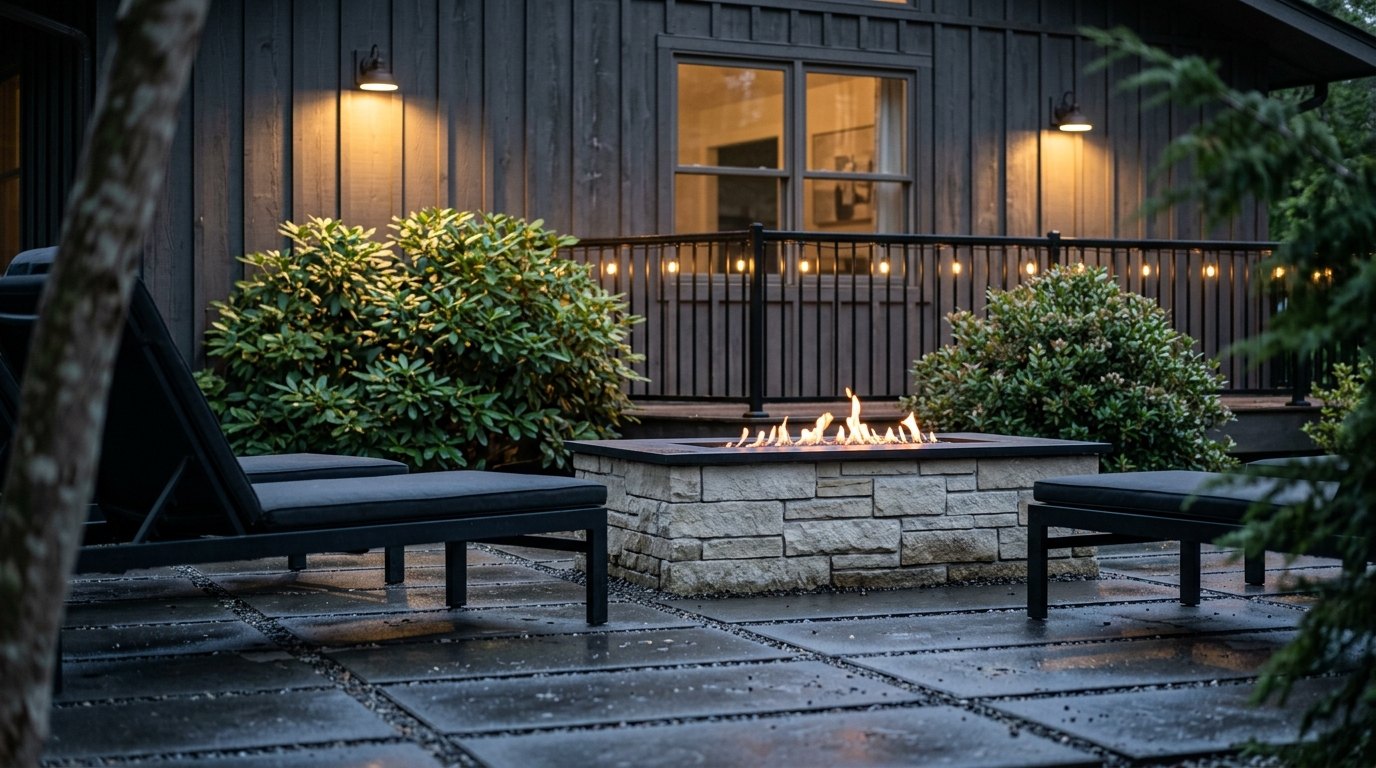
The Smokies have their own version of the floor, and it is aesthetic. The orange-box cabin with a green metal roof, the country-craft interior, the mismatched furniture assembled from three different clearance runs: that cabin is not competing. It may still book in July because the whole corridor books in July. It will not book in February, and February is where the year is won or lost.
Meeting the standard does not make you money. Failing to meet it costs you everything.
What actually decides performance now
These are the things we watch move the needle in this specific market. Note how few of them are cheap, and note that this is the point. Anything cheap and easy has already been done by every cabin around you.
Hot tubs, still
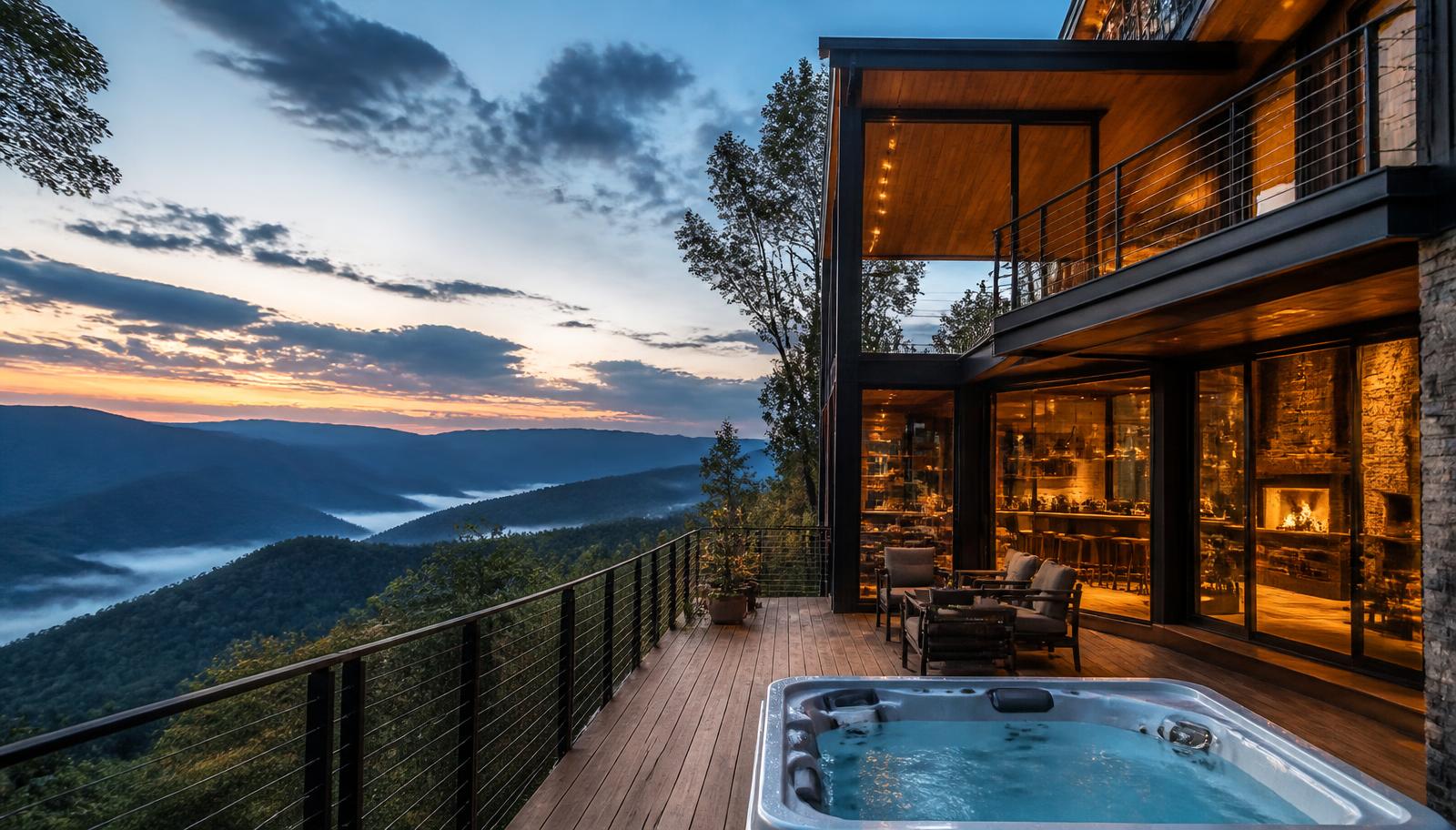
The private hot tub on a covered deck with a view remains the most-requested feature in the Smokies, and the rate premium attached to it in this market has been reported at levels no other single item comes close to. It is table stakes and a differentiator at the same time: you cannot win without one, and the quality and placement of yours still separates you.
Indoor pools
This is the standout of the current cycle. Pool premiums are highly market-dependent, and in the Smokies the key word is indoor. An outdoor pool serves you four months a year in a market that sells year-round. An indoor pool converts January, February, and a rainy October week into bookable inventory, and it puts you in a very short list of cabins when a family filters for it. It is a serious capital item with real ongoing cost, humidity management, and insurance implications. It is also the closest thing the corridor has to a genuine moat.
Complete game rooms, not a game
There is a large difference between a pool table in a basement corner and a designed game room: multiple stations, a real bar area, seating that lets the adults stay in the room with the kids. Groups book the Smokies to be together. A room that holds fourteen people comfortably for four hours is a booking driver. A single arcade cabinet is a photo.
Actual home theaters
Same principle. Tiered seating, real acoustics, a screen that reads as a theater in the listing photos. This is the amenity that carries a rainy afternoon, and rainy afternoons are common here.
Water park and resort-amenity access
Cabins inside communities with water parks or shared resort amenities get to advertise a feature set they did not have to build or insure. For the right buyer at the right price, that is efficient. It comes with HOA rules, fees, and rental restrictions that need to be read line by line before you write an offer, because those documents can quietly change the whole return.
Themed and design-forward cabins
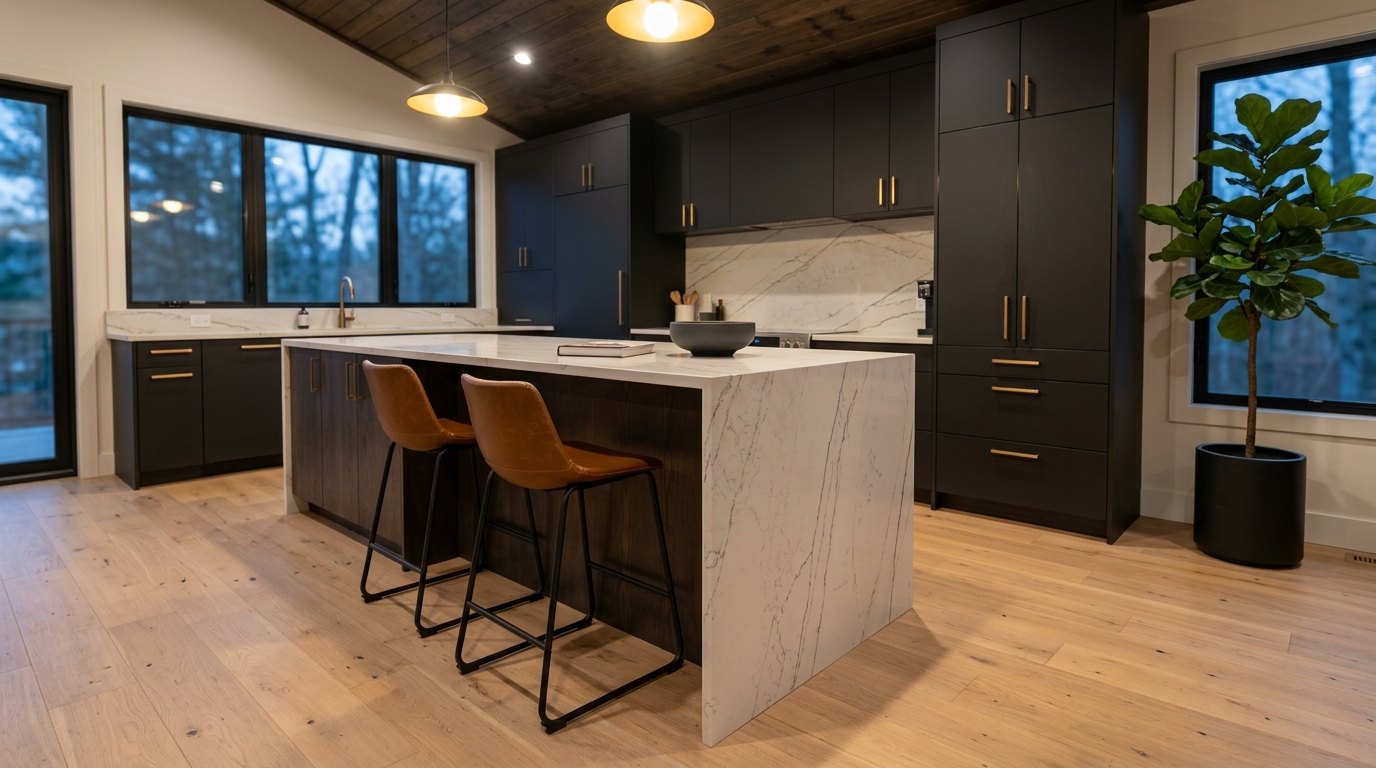
Theming works when it is executed at a professional level and commits to something. It fails when it is a decal on a wall. The same is true of interiors generally: full professional design, coherent architecture, and finishes that photograph well are doing revenue work, not vanity work. In a market where guests compare fifty thumbnails, the cabin that looks designed wins the click.
Architecture and location, which you cannot renovate into existence
The view, the grade of the driveway, the drive time to the Parkway, the ridgeline the deck faces. No amenity spend fixes a bad site. This is why the amenity conversation belongs at the purchase decision, not the year-two improvement plan.
Get the checklist
Enter your details and the one-page PDF downloads instantly. No spam, no pressure.
Concentration beats accumulation
Here is the mistake we see most often. An owner reads a list like the one above and tries to add a little of everything: a small game area, a modest theater nook, a hot tub squeezed onto a narrow deck. The result is a cabin that is technically amenitized and competitively invisible. Nothing is the reason someone books.
The cabins that outperform tend to do the opposite. They pick two or three things and go deep enough that each one is a headline. A genuinely great indoor pool. A game room that is the reason a family of twelve chose you. A hot tub with a view worth the photo.
Concentration also protects you on the cost side. Three amenities maintained properly beat seven maintained badly, and every amenity you add is another thing that can break, flood, or generate a one-star review in peak season.
Under-amenitized and over-amenitized both lose
Under-amenitized is the cabin that meets the floor and stops. It books the peak, it dies in the shoulder, and the pro forma that sold it assumed the peak ran all year.
Over-amenitized is subtler and more expensive. It is the cabin where the owner spent past what the location and bedroom count can ever recapture: a theater in a two-bedroom, a pool on a lot that cannot support the guest count to fill it. The amenity spend has to be proportional to the sleeping capacity, because revenue is ultimately a function of heads in beds at a defensible nightly rate. Amenities raise the rate you can defend. They do not create bedrooms.
The right question is never "what can I add?" It is "what does this specific property, at this bedroom count, in this location, need to be a first-choice cabin instead of a fallback?"
What this means if you are buying right now
When we look at a cabin with a buyer, the amenity read is part of the purchase math, not a wish list for later.
- Price the amenity into the offer, not the projection. A cabin that already has the indoor pool costs more up front and that is often correct. A cabin that needs one is a renovation project with a permit timeline, and the pro forma should not assume next summer.
- Check what the site allows before you fall in love with a plan. Grade, septic, setbacks, and county requirements decide whether your improvement is possible at all.
- Read the amenity claims in the listing against the booked calendar. Booked income beats projected income every time. If the amenities are as strong as the listing says, the last twelve months should show it.
- Count the operating cost. Pools, tubs, and theaters carry maintenance, utilities, and insurance. An amenity that lifts revenue 20% and costs 15% to run is a much smaller win than it looks.
The honest version
The Smokies still work. Demand is durable, the drive-to base is real, and this is not a market anybody needs to talk you into. But the era where the market carried the average cabin is behind us, and the spread between the top and the middle is where an owner's outcome now lives.
Amenities are how you get on the right side of that spread. Not all of them. The right two or three, executed at a level that makes your cabin the obvious choice, on a site that was worth buying in the first place.
If you are weighing a specific cabin and want a straight read on whether its amenity package can defend the rate the listing assumes, talk with our team. We would rather tell you the numbers do not work than watch you find out in February.
This article is general educational information, not legal, tax, or financial advice. Rules, rates, and local regulations change and depend on your specific situation. Consult your CPA, attorney, or a qualified professional before acting.
Thinking about buying, selling, or investing in the Smokies? Connect with Smithsonian Real Estate for a market-informed plan tailored to your goals.